
Table of Contents
- Why Military Memoirs About Family Matter
- Military Spouse Books That Honor Partnership and Separation
- Military Family Books: Stories Beyond the Service Member
- Military Memoirs About Coming Home: Reunion and Rebirth
- Real Life Stories of Soldiers: Firsthand Accounts of War and Home
- How to Choose the Right Military Memoir for Your Journey
- Conclusion
- Frequently Asked Questions
Last Updated: October 10, 2026
Why Military Memoirs About Family Matter
Military memoirs about family offer something rare: an honest look at what service costs the people who matter most. These aren’t sanitized war stories. They’re accounts of spouses waiting for phone calls that never come, children born while a parent is thousands of miles away, and the quiet strength it takes to hold a family together across deployments.
For veterans, these stories feel like someone finally gets it: the sacrifice belonged to everyone you loved. For spouses and partners, they validate the invisible work of managing a household alone and rebuilding a marriage after months apart. For families considering service, they show what’s at stake.
Gregory S. Davis captures this in ‘10,000 Miles to the Delivery Room.’ His account of racing home from Operation Desert Storm for his first child’s birth speaks to a specific military family struggle: the collision between duty and love.
The best military memoirs about family don’t glorify war. They honor the resilience of ordinary people facing extraordinary circumstances.
Military Spouse Books That Honor Partnership and Separation
Military spouse memoirs reveal the other side of deployment: the partner left behind managing finances, parenting decisions, and the emotional weight of uncertainty. Unlike combat-focused accounts, they keep the home front in the frame throughout.
Here are some spouse-perspective memoirs that explore the challenges and triumphs of military family life.
What these books share is honesty about the cost to the person who stayed home, who had to be strong when they wanted to fall apart, who learned to make decisions without their partner’s input.
If you are new to military spouse memoirs, start with Henderson’s ‘While They’re at War’ for breadth, then move to Vandevoorde’s ‘Separated by Duty, United in Love’ if you want practical guidance rather than narrative.
Military family books centered on spouses also explore reunion and rebirth. Coming back together after months or years apart is not automatic; you have to relearn each other. If a child was born during deployment, the service member meets their child for the first time while rebuilding a marriage that has been on pause.
Military Family Books: Stories Beyond the Service Member
Most military memoir lists stop at the service member or spouse. These accounts come from children, parents, siblings, and caregivers, people whose lives are reshaped by a family member’s service but who rarely tell the story in their own voice.
Children’s and adult children’s perspectives
Parents’ perspectives
Siblings’ and caregivers’ perspectives
The family perspective beyond the spouse is the least-covered angle in most military memoir lists. If you are a military child, a parent of a service member, or a sibling navigating your own feelings about a family member’s deployment, the books above are the ones that most directly speak to your experience.
The best military family books acknowledge that service is a family commitment. When one person serves, everyone sacrifices, waits, and changes. These narratives validate experiences that often go unspoken.
Military Memoirs About Coming Home: Reunion and Rebirth
The journey home is rarely what service members or their families expect. Coming home isn’t an ending, it’s a beginning that requires rebuilding everything.
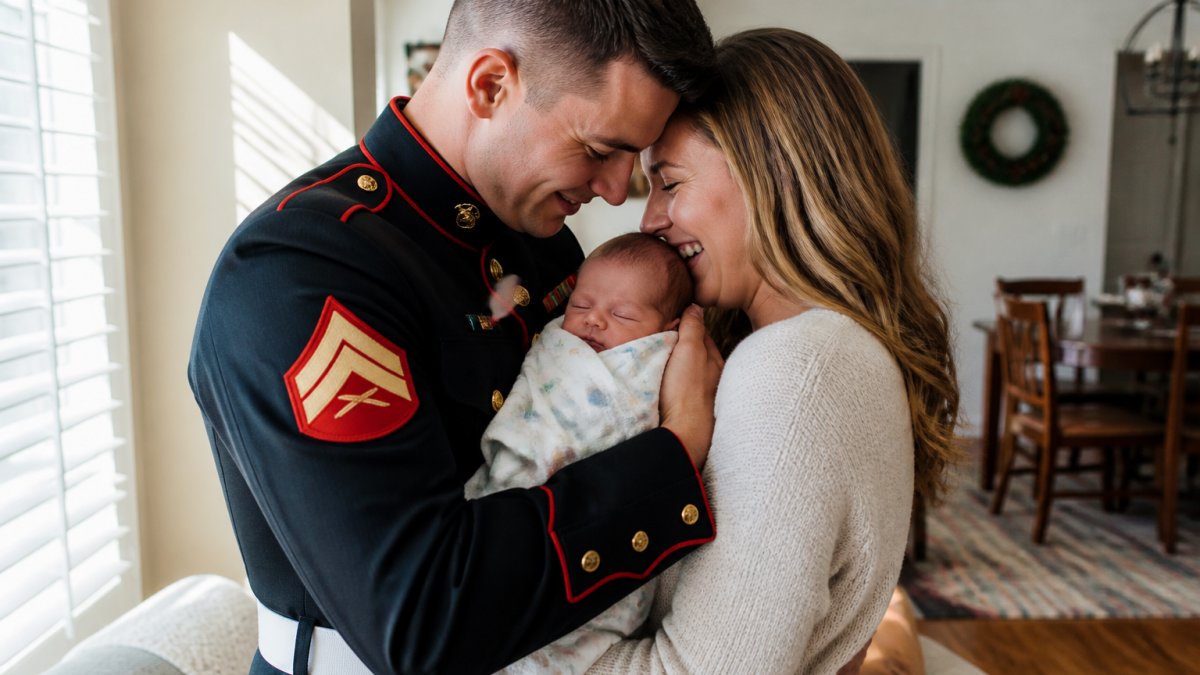
Reunion memoirs explore what happens after deployment ends. A service member returns to a changed family: children are older, a spouse has become independent out of necessity. The home you left isn’t the home you return to.
Some focus on practical challenges: adjusting to civilian life, managing PTSD or injuries, finding work. Others explore the emotional reality: distance that lingers even in the same room, guilt about missed time, difficulty reconnecting with a partner or child.
When a child is born during deployment, the reunion carries added weight. Meeting your newborn for the first time should be pure joy, but it’s complicated by months of separation, the missed pregnancy, and the feeling of arriving late to your own child’s life.
The best military memoirs about coming home don’t pretend reunion is simple. They show the work required to rebuild, and that families succeed and struggle, often at different times.
These stories normalize the difficulty of transition: coming home is hard, rebuilding takes time, and it’s okay if it doesn’t feel like a movie ending.
Real Life Stories of Soldiers: Firsthand Accounts of War and Home
Firsthand accounts from service members offer the perspective only someone who was there can provide. These aren’t secondhand reports or historical analysis, but personal narratives from people who experienced war and the sacrifice of being away from family.
The most powerful military memoirs are honest about the internal conflict: pride in service alongside grief at missing your child’s birth, your spouse’s graduation, ordinary moments that become precious in their absence.
A Marine’s account of Operation Desert Storm carries weight because it’s specific: what the days felt like, the uncertainty of not knowing when, or if, you’d go home, and how that uncertainty shapes decision-making, hope, and brief phone calls to the people you love.
Real life stories of soldiers show that service members aren’t monolithic: some handle separation with resilience, others struggle, some come home changed in ways they can’t explain, some feel relief and guilt about that relief. The complexity makes these accounts credible.
According to the U.S. Department of Veterans Affairs, understanding veteran experiences through personal narrative is part of honoring service. These firsthand accounts help civilians understand what military service actually means, not the abstract concept, but the lived reality.
The best firsthand accounts don’t shy away from the hard parts: fear, doubt, loneliness, and the constant awareness that your family is waiting. They show why reunion matters so much and why coming home is never simple.
How to Choose the Right Military Memoir for Your Journey
Not every military memoir will speak to you. Your experience shapes what resonates.
If you’re a veteran, you might connect most with firsthand accounts from your service branch or era. A Gulf War veteran may feel seen by a Marine’s account of Operation Desert Storm in ways a Vietnam-era memoir can’t match. Specific details matter.
If you’re a military spouse, memoirs centered on partnership and separation will feel most relevant. Look for books exploring what you’ve experienced: loneliness, hard-won independence, the challenge of reunion.
If you’re a military child or the parent of a service member, seek out memoirs that center your perspective. Your experience is different, and you deserve stories that validate it.
Consider what you need from the book, inspiration, validation, a way to process grief. Knowing what you’re seeking helps you find the right fit.
The best military memoirs about family are honest about both sacrifice and love. They don’t minimize what service costs or pretend it’s always noble. They show how people can be proud of service and devastated by its cost at once.
Research from the American Library Association shows that personal narratives help readers process their own experiences. Reading someone else’s story of military family life can validate your own feelings and help you feel less alone.
Look for memoirs that:
- Center family relationships, not just combat
- Show the specific challenges of your situation
- Offer honest reflection, not just storytelling
- Include details that help you understand what actually happened
- Validate the cost without dismissing the service
The right military memoir will feel like someone finally understands what your family has been through.
Conclusion
The stories of military families deserve to be told and heard. They show what service costs beyond the battlefield: missed births, separations, the work of rebuilding after deployment. These memoirs honor the resilience of spouses, children, parents, and service members alike.
Gregory S. Davis’s ‘10,000 Miles to the Delivery Room’ stands as a powerful example of this honest, family-centered narrative. His account of a Marine’s race home from Operation Desert Storm for his first child’s birth captures the collision between duty and love that defines military family life, offering an inspiring perspective on war through the heart of a husband and father.
If you’re seeking a military memoir that honors family bonds and the quiet strength required to hold a family together across service, Gregory S. Davis’s work provides an authentic, deeply personal entry point. Start with his story, then explore others that speak to your own experience. The right military memoirs about family will help you feel seen, understood, and less alone in what your family has endured.
Frequently Asked Questions
What makes a military memoir about family different from other military books?
Military memoirs about family center on the personal bonds, sacrifice, and emotional weight of service on loved ones, not just combat tactics or military history. These stories explore how deployment affects marriages, children, and the home front. They offer intimate perspectives on reunion, separation, and the quiet battles families face when a service member is away. Readers seeking connection to their own military family experience find these narratives more relatable than broader military histories.
Are military spouse books written only for spouses, or can service members read them too?
Military spouse books are valuable for anyone touched by military life, service members, partners, adult children of veterans, and extended family members. These narratives reveal how deployment and separation affect the people waiting at home, offering service members insight into their loved ones’ experiences. Many service members report that reading their spouse’s or family’s perspective deepens their understanding of sacrifice and strengthens their connection to the home front experience.
What should I look for when choosing a military family book?
Consider the service branch, era, and specific family dynamic the memoir explores. If you served in the Gulf War, a memoir from that period may resonate more deeply. Decide whether you want a spouse’s perspective, a parent’s view, or a service member’s account of balancing family and duty. Check the book’s length and tone, some memoirs are reflective and hopeful, while others are heavier. Read reviews from readers in similar situations to your own for the best match.
Are there military memoirs about returning home to a new baby?
Yes. Some of the most powerful military memoirs explore the intersection of war, separation, and new parenthood. These stories capture the urgency of racing home for a birth, the joy of meeting a child for the first time after months away, and the challenges of bonding with a child you’ve never held. These narratives resonate deeply with military families who have experienced birth during deployment or the race to return home for a child’s arrival.