
Table of Contents
- Who Is Gregory Davis?
- Military Service and Operation Desert Storm
- 10,000 Miles to the Delivery Room: The Story Behind the Memoir
- Themes in the Operation Desert Storm Memoir
- Why This Military Family Memoir Resonates
- Family, Resilience, and Personal Life
- Conclusion: Gregory Davis’s Legacy
- Frequently Asked Questions
Last Updated: October 16, 2026
Who Is Gregory Davis?
Gregory Davis is a U.S. Marine veteran whose story of courage, sacrifice, and devotion has resonated with military families nationwide. His book, “10,000 Miles to the Delivery Room,” transforms his Operation Desert Storm experience into a testament about what military service costs those left behind and those fighting abroad.
The power of Gregory Davis‘s account lies in its authenticity. Rather than combat tactics or battlefield heroics, it centers on the emotional marathon of separation, uncertainty, and the race to be present for life’s defining moments. For veterans, spouses, and children of military families, Gregory Davis speaks to what official histories rarely capture: the anxiety of waiting, duty pulling against love, and the resilience to hold both.
Military Service and Operation Desert Storm
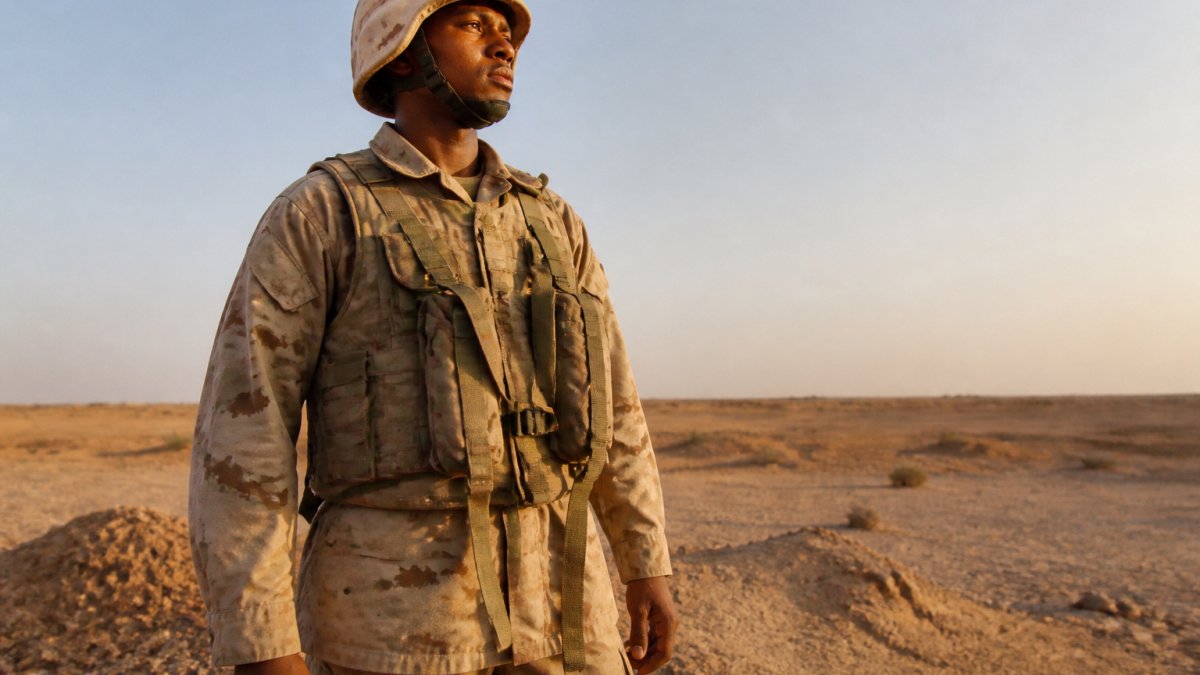
Gregory Davis served as a U.S. Marine during Operation Desert Storm, the 1990-1991 conflict that defined a generation of American military personnel. For Gregory Davis, the deployment became more than an assignment, it was the backdrop for a deeply personal crisis that tested every aspect of his character.
Operation Desert Storm lasted roughly six weeks of intensive combat, though the deployment cycle stretched far longer for personnel like Gregory Davis. Marines faced scorching heat, logistical challenges, and the psychological weight of combat. Yet for Gregory Davis, the hardest battle was internal: knowing that thousands of miles away, his wife was approaching the birth of their first child alone.
The timing created an impossible situation: Gregory Davis was committed to his unit and country, yet bound by the instinct to be present for his family. That tension between obligation and longing forms the emotional core of his memoir. Operation Desert Storm provided the setting, but the real conflict was deeply personal, one many veterans of the era still carry unspoken.
10,000 Miles to the Delivery Room: The Story Behind the Memoir
The title tells the story: 10,000 miles separated Gregory Davis from the moment he needed to be present most. “10,000 Miles to the Delivery Room” is not a conventional war memoir but a race against geography, time, and circumstance, chronicling his attempt to return home before his first child was born, a journey complicated by deployment, logistics, and the unpredictability of both war and childbirth.
What makes the narrative distinctive is how Gregory Davis refuses to simplify the moral landscape. He frames neither duty as wrong nor his desire to be home as selfish, presenting instead two legitimate needs pulling in opposite directions: his unit depended on him, but his wife and unborn child needed him more. Gregory Davis explores what it means to make impossible choices and live with their consequences.
The memoir’s power comes from Gregory Davis‘s willingness to be vulnerable. Military culture emphasizes stoicism, and Gregory Davis honors that tradition while breaking its silence about the emotional cost, his fear, longing, and helplessness presented not as weakness but as honest humanity under pressure.
“10,000 Miles to the Delivery Room” distinguishes itself by centering the emotional and personal dimensions of military service rather than combat action, making it resonate deeply with military families facing separation and uncertainty.
Themes in the Operation Desert Storm Memoir
Gregory Davis‘s memoir works because its themes are anchored in concrete moments rather than abstract sentiment. The separation at its center is not a metaphor but a measurable distance and window of time. Operation Desert Storm‘s air campaign began in mid-January 1991 and the ground phase lasted roughly 100 hours in late February, but the surrounding deployment cycle stretched across months of staging, waiting, and return logistics.
Resilience in Gregory Davis‘s account is procedural, not heroic: a Marine checking a duty roster against a due date, a spouse managing a household alone while fielding uncertain phone calls, a chain of command weighing a personnel request against mission requirements.
Sacrifice is treated as distributed rather than individual. Gregory Davis claims no monopoly on hardship: the spouse who delivers a child alone, the grandparents who step into the gap, the unit mates who cover for a Marine awaiting news from home, each carries a share.
Duty and love are presented as competing legitimate claims, not a moral hierarchy. Gregory Davis refuses the easy resolution where one value simply wins, the book’s most distinctive thematic move, and why it reads less like a war story than a study in impossible trade-offs.
Hope functions as a discipline rather than a mood: it keeps a service member filing requests, making calls, and planning a return even when the timeline is out of his hands, a portable lesson for anyone whose effort and outcome are only loosely connected.
What distinguishes “10,000 Miles to the Delivery Room” from other Desert Storm memoirs is not the themes themselves, resilience, sacrifice, duty, hope, but the specificity with which Gregory Davis ties each theme to a concrete decision, a dated milestone, or a named relationship.
A note on names and identity
Because “Gregory Davis” is a common name, readers searching for this memoir should confirm they have the right person. The author of “10,000 Miles to the Delivery Room” is a U.S. Marine veteran of the Operation Desert Storm era, distinct from other public figures sharing the name, including musicians, attorneys, and athletes. When citing the memoir, use the full title and the author’s byline as printed on the book, and prefer publisher or retailer listings over aggregator pages that may conflate multiple people.
How to verify a claim about this Gregory Davis
- Check the book’s copyright page and publisher listing for the author’s byline and any middle initial.
- Cross-reference any biographical claim against a first-person source (author’s note, interview, or official book page) rather than a secondary summary.
- If a search result mixes military service with music, law, or sports, treat it as a different Gregory Davis until a primary source connects the two.
This verification habit matters because the search results for “gregory davis” routinely blend several unrelated people. A reader who wants the Desert Storm memoirist should look for the book title, not just the name.
Why This Military Family Memoir Resonates
Gregory Davis‘s memoir speaks to an audience far broader than military history enthusiasts, addressing universal human experiences through a specific lens: the struggle to balance competing obligations, the fear of missing irreplaceable moments, and the strength required to endure separation.
Veterans recognize themselves in Gregory Davis‘s account, finding validation for experiences they’ve carried silently and language for conflicts they never fully articulated. For spouses of deployed service members, his husband’s-perspective narrative offers insight into their partners’ emotional landscape during separation. Parents who’ve experienced or anticipated a birth apart from a loved one find profound recognition in his journey.
The memoir also resonates because Gregory Davis refuses to present military service as simply noble or simply tragic. He holds complexity: service is meaningful and costly, duty essential and painful, sacrifice real and often invisible. This appeals to readers tired of simplistic narratives about war, and Gregory Davis treats his audience as intelligent enough to understand ambiguity.
Military memoirs that acknowledge emotional vulnerability alongside duty and sacrifice tend to resonate more deeply than those that emphasize combat alone. Gregory Davis understands this, which is why his account continues to find new readers among those seeking authentic perspectives on military life.
Family, Resilience, and Personal Life
Gregory Davis‘s personal life, as presented in “10,000 Miles to the Delivery Room,” hinges on one event: the birth of his first child during his Operation Desert Storm-era deployment. That hinge makes the memoir legible to readers who never wore a uniform, and makes the book easy to confuse with other life stories attached to the same common name.
What the memoir actually covers about family
- The decision-making pressure of a deployment that overlaps with a due date.
- The spouse’s experience of late pregnancy and childbirth without a partner present.
- The communication constraints of the era, letters, limited phone access, and the lag between sending and receiving news.
- The return and reintegration period, when a service member becomes a parent to a child he has not yet met.
These concrete family beats are more useful than any general statement about “resilience,” because they describe what happened rather than what it meant.
Why this section is also a disambiguation guide
Search results for “gregory davis” mix several unrelated people. If you arrived here looking for a specific Gregory Davis, use the table below to route yourself to the right one. Each row describes a category of person who commonly appears under this name; it is not a claim that any two are the same individual.
| If you mean… | Look for |
|---|---|
| The Marine veteran and memoir author | “10,000 Miles to the Delivery Room” and the author byline on the book’s publisher page |
| A musician or recording artist named Gregory or Greg Davis | Label pages, streaming-service artist profiles, and discography listings |
| An attorney or judge named Gregory Davis | Bar association directories, court opinions, and law-firm biographies |
| An athlete or coach named Gregory or Greg Davis | Team rosters, league pages, and official sports archives |
| A business or academic figure named Gregory Davis | Institutional staff pages and professional association directories |
How to confirm you have the right person
- Start with the most specific identifier you have, a book title, a band name, a court, a team, or an employer.
- Match that identifier against a primary source: a publisher page, a label page, a court record, or an institutional bio.
- Only then read secondary summaries, which are the pages most likely to blend two different people.
What “resilience” means in this specific story
In Gregory Davis‘s account, resilience is not a personality trait but a set of behaviors: maintaining communication under constraints, planning around an uncertain timeline, and rebuilding a family routine after a long absence. Framed that way, the concept becomes checkable against the narrative rather than merely asserted.
When a name is as common as “Gregory Davis,” the fastest way to avoid mixing people up is to search with a second identifier, a title, an organization, or a location. A single-name search will almost always return a blend of unrelated results.
Conclusion: Gregory Davis’s Legacy
Gregory Davis has created something rare in military literature: a deeply personal account honoring both individual experience and universal human truths. His memoir doesn’t claim to represent all military service or all military families, yet it speaks authentically to many. Through “10,000 Miles to the Delivery Room,” Gregory Davis has given voice to the quiet struggles of military families.
The legacy of Gregory Davis extends beyond his own story. By documenting his journey with honesty and vulnerability, he’s validated experiences countless others lived but struggled to articulate, demonstrating that military service encompasses far more than combat: the emotional labor of separation, the strength to maintain family bonds across distance, and the grace of returning home transformed.
For readers seeking an authentic perspective on Operation Desert Storm and military family life, Gregory S. Davis’s “10,000 Miles to the Delivery Room” offers an intimate, compelling narrative that honors both sacrifice and love. This memoir serves as a testament to the resilience of military families and the enduring human spirit.
Frequently Asked Questions
Is ‘10,000 Miles to the Delivery Room’ a true story?
Yes. ‘10,000 Miles to the Delivery Room’ is an authentic memoir by Gregory S. Davis, a U.S. Marine veteran who served during Operation Desert Storm. The book chronicles his real journey through the Gulf War while racing to return home for the birth of his first child. Davis’s account is grounded in his lived experience as both a soldier and a husband facing one of life’s most defining moments.
What makes Gregory Davis’s military family memoir different from other war memoirs?
The defining angle of this military family memoir is its focus on the quiet, intimate battles faced by military families during wartime. Rather than emphasizing combat operations, Gregory Davis centers the narrative on a Marine’s internal struggle to be present for his family while serving his country. The book explores resilience, sacrifice, and love through the lens of a husband and father, offering readers an uncommon perspective that honors both the soldier’s duty and the family’s enduring strength during separation.
Will military spouses connect with this book even if they didn’t serve?
Absolutely. Military spouses and partners are a core audience for this memoir. The book addresses the emotional challenges of deployment, separation, and managing major life events apart from a loved one. Gregory Davis’s narrative explores the perspective of someone navigating military service while emotionally connected to family milestones, making it deeply relevant to anyone who has experienced or anticipated the strain of military separation on relationships and personal moments.