
Table of Contents
- The Road to August 1990: Why Iraq Invaded Kuwait
- Saddam Hussein’s Motives and Regional Ambitions
- The Invasion and Occupation of Kuwait
- Gulf War 1990-1991 Timeline: From Invasion to Ceasefire
- International Condemnation and the UN Response
- Operation Desert Storm and the Coalition Ground Offensive
- Gulf War Consequences for the Region and the World
- Conclusion: Multiple Causes, One Defining Moment
- Frequently Asked Questions
Last Updated: October 14, 2026
The Road to August 1990: Why Iraq Invaded Kuwait
What caused the Gulf War in 1990? The short answer is that Iraq’s invasion of Kuwait on 2 August 1990 grew out of a knot of causes: crushing war debt from the Iran-Iraq War, a bitter dispute over oil production and prices, long-standing territorial claims, and Saddam Hussein’s regional ambitions. No single trigger explains it. This guide from Gregory S. Davis separates the immediate triggers from the deeper pressures that made war thinkable, because the causes are often flattened into one sentence when they deserve far more.
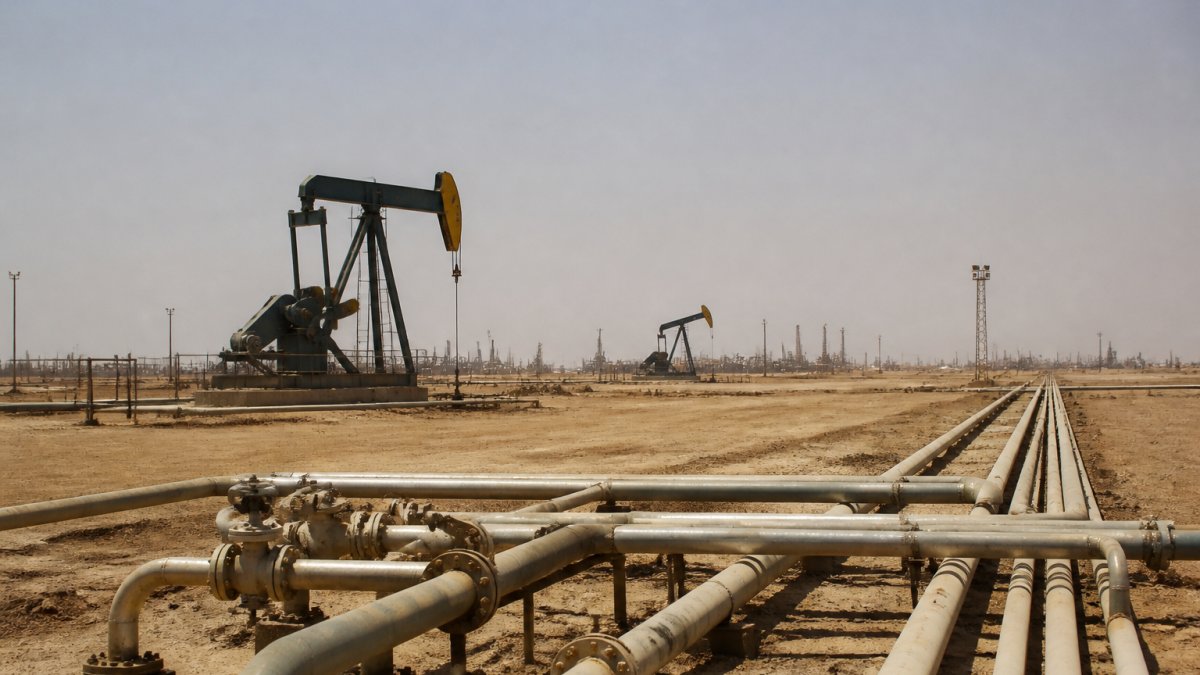
Iraq’s War Debt and Economic Pressure After the Iran-Iraq War
The eight-year Iran-Iraq War left Iraq financially exhausted. Baghdad had borrowed heavily from Gulf neighbours, including Kuwait and Saudi Arabia, to fund the fighting, and by 1990 it faced a debt burden it could not service from oil revenue alone. A common mistake in retellings of the period is treating this as background colour. In practice, it was the engine. Iraq pressed creditors for relief and argued that the loans should be written off as a contribution to a war it had fought on the region’s behalf.
When that relief did not come, economic pressure hardened into political grievance.
The Oil Dispute: Rumaila, OPEC, and Oil Prices
Iraq accused Kuwait of two things that struck directly at its recovery: exceeding OPEC production quotas and driving down oil prices, and pumping from the Rumaila oil field along the disputed border. Lower prices meant less revenue for a state that needed every barrel. Baghdad also revived older territorial claims, treating Kuwait as a province that had been carved away. The oil dispute is the part most summaries skip, and it is the part that turned a financial squeeze into a confrontation.
Saddam Hussein’s Motives and Regional Ambitions
Saddam Hussein’s decision to invade Kuwait is best understood as the product of overlapping motives rather than a single master plan. Historians and former officials disagree about which motive weighed most heavily, and that disagreement is itself part of the answer to what caused the war.
Economic motives. The most straightforward reading is that Saddam needed money. Iraq’s war debt, reconstruction costs, and falling oil revenue created a fiscal crisis. Kuwait’s reserves and wealth offered a solution: control of Kuwaiti oil would increase Iraq’s leverage over prices, and a quick victory could erase the debt problem by force. This interpretation treats the invasion as a calculated response to economic desperation.
Territorial and historical claims. Iraq had long asserted that Kuwait was historically part of the Basra province of the Ottoman Empire and had been separated by British colonial arrangements. Baghdad revived these claims in 1990, arguing that Kuwait was an artificial entity. Most historians treat the territorial claim as a convenient justification rather than the primary driver, but it gave the invasion a legal-sounding cover and resonated with some Arab nationalists.
Strategic and regime-security motives. Another interpretation emphasizes Saddam’s regional ambitions and his desire to lead the Arab world. Control of Kuwait would give Iraq a larger share of Gulf oil, a longer coastline, and greater weight in OPEC. Some analysts also argue that Saddam saw a foreign adventure as a way to distract from domestic discontent after the costly Iran-Iraq War. This view holds that the invasion was less about Kuwait specifically than about Iraq’s position in the region.
The Glaspie conversation. In late July 1990, US Ambassador April Glaspie met with Saddam Hussein in Baghdad. The conversation has become one of the most debated episodes leading up to the invasion. According to the Iraqi transcript and later accounts, Glaspie said the United States took no position on Arab-Arab border disputes such as Iraq’s dispute with Kuwait, while also urging a peaceful resolution. Some critics argue this signalled that Washington would not intervene; others note that the US had publicly called for a peaceful settlement and that Saddam may have misread or ignored the message. The exchange is contested, and it should not be presented as a single proven cause. It is better understood as one factor among many, an ambiguous signal that may have emboldened Saddam, but did not create the underlying pressures.
Why interpretations differ. Economic, territorial, strategic, and regime-security explanations are not mutually exclusive. A balanced reading is that economic pressure made the invasion possible, territorial claims provided a rationale, and Saddam’s ambitions made it attractive. The Glaspie episode sits at the margins of causation: it may have affected timing, but it did not create the debt, the oil dispute, or the territorial claims.
The strongest historical accounts treat Saddam’s motives as layered. Any explanation that reduces the war to a single cause, whether debt, oil, or a misunderstood diplomatic message, is incomplete.
Declassified US documents on Iraq-Kuwait diplomacy, 1990
The Invasion and Occupation of Kuwait
On 2 August 1990, Iraqi military forces crossed into Kuwait and rapidly overran the country. Kuwait’s small armed forces could not hold, and within days Iraq had occupied the territory and moved toward annexation. The speed of the operation shocked observers and left the international coalition with a narrow window to respond before Iraq’s position hardened.
Gulf War 1990-1991 Timeline: From Invasion to Ceasefire
A dated sequence helps separate causes from consequences. The Gulf War 1990-1991 timeline below covers the main turning points.
| Date | Event |
|---|---|
| 2 August 1990 | Iraq invades Kuwait; UN Security Council condemns the invasion |
| August 1990 | UN sanctions imposed; Operation Desert Shield begins |
| November 1990 | UN authorises use of force if Iraq does not withdraw |
| January 1991 | Air campaign opens Operation Desert Storm |
| February 1991 | Coalition ground offensive; Iraqi forces expelled from Kuwait |
| February 1991 | Ceasefire; Kuwait liberated |
International Condemnation and the UN Response
International condemnation was immediate and unusually broad. The UN Security Council passed resolutions demanding withdrawal, imposing sanctions, and ultimately authorising force. That sequence mattered: it gave the coalition a legal foundation and kept a diverse group of countries aligned. The United States and coalition partners then deployed forces to Saudi Arabia to defend the kingdom and protect the Gulf’s oil infrastructure, a deployment that became Operation Desert Shield.
Operation Desert Storm and the Coalition Ground Offensive
Operation Desert Storm opened with an air campaign in January 1991 aimed at Iraqi command, infrastructure, and forces in Kuwait. Weeks of bombing preceded a short ground offensive in February 1991 that expelled Iraqi forces from Kuwait in a matter of days. The ceasefire followed quickly. For those who served, the ground phase was brief but defining, and it is the period Gregory S. Davis writes about in 10,000 Miles to the Delivery Room, a Marine’s account of racing home for the birth of his first child while the war unfolded.
The coalition response did not cause the war; it answered it. Separating the two is the difference between understanding the Gulf War and simply retelling it.
Gulf War Consequences for the Region and the World
The Gulf War consequences reshaped regional security for a generation. Kuwait was restored, but Iraq emerged under severe sanctions and a weakened economy. The United States deepened its military presence in the Gulf, and the coalition model became a template for later interventions. The war also left lasting questions about how far the international community would go to reverse an invasion, questions that still echo in debates about sovereignty and collective security.
Conclusion: Multiple Causes, One Defining Moment
No single answer satisfies the question of what caused the Gulf War in 1990. Debt, oil, territory, ambition, and misread signals all contributed, and the invasion of 2 August 1990 was the moment they converged. For families who lived through the deployment and separation that followed, the history is personal as much as political. Gregory S. Davis tells that side of it in 10,000 Miles to the Delivery Room, a firsthand account of service, sacrifice, and the pull of home.
Frequently Asked Questions
What was the main reason for the Persian Gulf War?
The immediate trigger was Iraq’s invasion of Kuwait on August 2, 1990. But the Gulf War causes ran deeper. After the Iran-Iraq War, Iraq owed billions in war debt, oil prices were low, and Saddam Hussein accused Kuwait of overproducing oil and stealing from the Rumaila field. He also revived territorial claims. The invasion combined economic pressure, oil disputes, and regional ambition.
Why did Iraq invade Kuwait in 1990?
Iraq’s decision came down to money, oil, and power. The eight-year Iran-Iraq War left Iraq with massive debt, much of it owed to Kuwait and Saudi Arabia. When Kuwait refused to forgive the debt and kept pumping oil that held prices down, Saddam Hussein faced an economic crisis. He accused Kuwait of slant-drilling into the Rumaila oil field and demanded compensation. When diplomacy stalled, he invaded on August 2, 1990.
How did the international community respond to Iraq’s invasion of Kuwait?
The response was swift and unified. The UN Security Council passed Resolution 660 demanding immediate withdrawal, followed by Resolution 678 authorizing force if Iraq did not comply by January 15, 1991. The United States led a coalition of 34 nations, deploying troops to Saudi Arabia under Operation Desert Shield. Sanctions were imposed, and when Iraq refused to leave, Operation Desert Storm began on January 17, 1991.
What were the Gulf War consequences for the region?
The Gulf War consequences reshaped the Middle East. Kuwait was liberated, but Iraq’s infrastructure was devastated and Saddam Hussein remained in power, leading to future conflicts. The U.S. established a lasting military presence in Saudi Arabia and the Persian Gulf. The war also left environmental damage from oil fires and spills, displaced hundreds of thousands, and set the stage for the 2003 Iraq War.
The causes are debated by historians, but the human cost of the months that followed is not. If you want the war through the eyes of a Marine racing home for his child’s birth, 10,000 Miles to the Delivery Room offers that perspective. Gregory S. Davis brings an authentic veteran’s voice, a focus on the quiet battles military families face, and a story that honours resilience and sacrifice. Get started with Gregory S. Davis and read the account that puts a human face on Operation Desert Storm.