Last Updated: November 15, 2026
Quick Summary
Military memoirs offer insight into the strength found in ordinary people facing defining moments, which is why they endure. They do not rely on generals or famous battles; instead they show an ordinary service member confronting a moment that changes everything, and readers recognize themselves in it.
- A military memoir is a first-person account of military service written by the person who lived it.
- The strongest soldier stories follow service members through quiet parts like missed mail and family milestones.
- Desert Storm memoirs focus on anticipation, uncertainty, and distance from family rather than extended combat.
- Write for the reader, not the record, and name your defining moment early.
- Read two or three memoirs from different roles so a conflict looks three-dimensional.
Table of Contents
- Why Military Memoirs Matter: The Strength of Ordinary People
- Real Life Stories of Soldiers: Beyond the Battlefield
- Military Memoirs About Operation Desert Storm: A Defining Era
- How to Write a Military Memoir: Turning Service into Story
- The Defining Moment: What Makes a Memoir Unforgettable
- Representation Across Eras, Roles, and Experiences
- The Lasting Effects of Service and Return to Civilian Life
- Choosing Your Next Military Memoir: A Reader’s Guide
- Frequently Asked Questions
Why Military Memoirs Matter: The Strength of Ordinary People
The best military memoirs offer insight into the strength found in ordinary people facing defining moments, and that is exactly why they endure. They do not rely on generals or famous battles. They show an ordinary service member confronting a moment that changes everything, and readers recognize themselves in it.
This guide examines what gives military memoirs their pull, which titles are worth your time, and how to choose your next read.
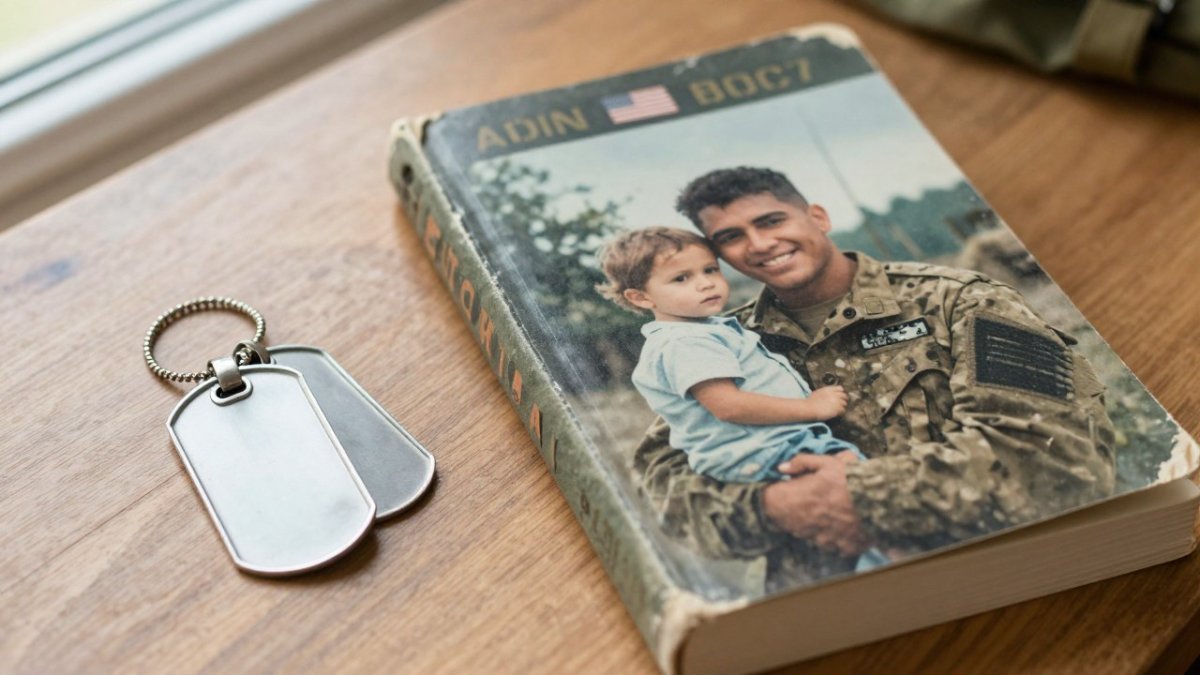
A military memoir is a first-person account of military service written by the person who lived it. It differs from an autobiography because it narrows in on wartime experience, and from military history because it stays close to one person’s view.
That narrow view is the point. According to the Library of Congress collections on veterans’ personal narratives, firsthand accounts remain among the most requested primary sources for understanding modern conflict. Official histories record what happened. Memoirs record what it felt like.
If you want to see this theme in full, About the Book introduces the story of a Marine racing home for the birth of his first child.
Real Life Stories of Soldiers: Beyond the Battlefield
Real life stories of soldiers rarely stay on the battlefield. The strongest ones follow a service member through the quiet parts too: the mail that never arrives, the spouse managing a household alone, the child who grows a year older between visits.
Battlefield scenes get the attention, but the human side of service carries the weight. Readers remember the phone call, the letter, the moment a soldier realizes what was sacrificed back home.
- The fear before a mission, not just the mission
- The friendships that form in weeks and last decades
- The family milestones missed and celebrated from a distance
- The return, which is often harder than the deployment
Notice what these have in common: none require rank, medals, or a famous unit. A veteran memoir earns its place through honesty, not accomplishment.
Military Memoirs About Operation Desert Storm: A Defining Era
Military memoirs about Operation Desert Storm occupy a strange place in the genre. The ground war was brief, yet the buildup, the waiting, and the return home shaped a generation of service members.
That gap between a short war and a long aftermath is what makes Gulf War stories so compelling. Desert Storm memoirs tend to focus on anticipation, uncertainty, and the distance from family rather than extended combat.
For readers who served in that era, these books can feel like recognition. For everyone else, they explain a conflict that official histories compress into a few paragraphs.
If you want a deeper guide to firsthand Gulf War accounts, Desert Storm personal memoirs covers the era in more detail.
How to Write a Military Memoir: Turning Service into Story
Learning how to write a military memoir starts with one decision: write for the reader, not the record. Service records list dates and assignments. A memoir needs scenes, sensory detail, and a reason each chapter exists.
Here is a practical sequence, with examples of how published memoirs handle each step:
- Build a timeline first. List the dates, locations, and key events before writing a single scene. Most memoirists find that the timeline reveals which years were formative and which were filler.
- Choose one throughline. A deployment, a relationship, a single year. Jarhead by Anthony Swofford narrows to one Marine’s Gulf War deployment. Memoirs that try to cover an entire career lose their shape.
- Write the moments you remember in detail. Memory is a good editor. If a scene stays vivid years later, it will stay vivid on the page.
- Include the home front. Letters, calls, and family perspective give the story its emotional range.
- Read it aloud. Anything that sounds like a report needs rewriting.
- Get a veteran reader’s feedback. Someone who served will catch what rings false.
Watch out: the most common mistake is starting with basic training and marching chronologically through everything. Readers do not need your full service history. They need the defining moment and what led to it.
| Step | What to Do | Why It Matters | Example from Published Memoirs |
|---|---|---|---|
| 1 | Build a timeline | Prevents gaps and contradictions | Swofford’s Gulf War timeline compresses months of waiting into a few chapters |
| 2 | Pick one throughline | Keeps the narrative focused | Williams centers on one deployment and its aftermath |
| 3 | Draft vivid scenes | Turns events into story | Scene-level detail in Jarhead makes the boredom feel earned |
| 4 | Add the home front | Widens emotional range | Letters and calls anchor the return chapters |
| 5 | Read aloud | Catches stiff, report-like prose | Dialogue that reads well aloud usually reads well on the page |
| 6 | Veteran feedback | Verifies authenticity | Veterans catch rank, timeline, and tone errors |
A second pattern worth studying: the best memoirs name their defining moment early and return to it. That repetition is not padding; it is structure. When you draft, write one sentence that states your defining moment, tape it above your desk, and cut any chapter that does not serve it.
The Defining Moment: What Makes a Memoir Unforgettable
A defining moment is the single event a memoir is built around: the decision, loss, or reunion that changes the narrator. Memoirs without one read as a list of events. Memoirs with one read as a story.
The best examples are often understated. A soldier choosing to help a stranger. A husband counting miles home. A servicewoman deciding to reenlist. What makes the moment defining is what it costs and what it reveals.
Why personal journals preserve the most honest history of war explains why private, unfiltered accounts often outlast official narratives.
When you evaluate a military memoir, ask one question: can you name its defining moment in a sentence? If yes, the author knew what the book was about.
Representation Across Eras, Roles, and Experiences
The genre has widened considerably. Where military memoirs once centered on combat officers, readers now find accounts from medics, mechanics, military spouses, and service members who never fired a weapon.
That range matters. A veteran memoir from a supply clerk describes a different war than one from an infantryman, and both are true. Reading across roles builds a fuller picture of military life than any single branch or era can provide.
- Combat arms and support roles
- Enlisted perspectives and officer accounts
- Gulf War, Iraq, Afghanistan, and peacetime service
- Spouses and children writing from the home front
A common mistake is treating one memoir as representative of an entire war. It never is. Read two or three from different roles and the conflict starts to look three-dimensional.
The Lasting Effects of Service and Return to Civilian Life
The return home is where many memoirs find their real subject. Reintegration into civilian life, the silence of a quiet house, the small friction of a family that changed while you were gone: these are the chapters readers underline.
Deployment does not end at the airport. Many service members describe the transition as harder than the deployment itself, and the families who waited carry their own version of that strain. A guide to deployment’s impact on families explores that side in depth.
Memoirs that handle this honestly do a service beyond storytelling. They give returning service members language for what they are feeling and give families a window into it.
Choosing Your Next Military Memoir: A Reader’s Guide
Choosing well comes down to matching the book to your reason for reading.
A short, annotated starting list.
- Jarhead by Anthony Swofford. Defining moment: a Marine sniper’s long wait in the desert during Operation Desert Storm, and the gap between training and the war he actually gets. Why it illustrates strength: the book is about endurance and ambiguity rather than heroics.
- Love My Rifle More Than You by Kayla Williams. Defining moment: a young woman navigating service, harassment, and belonging in the Iraq War. Why it illustrates strength: it shows ordinary courage in daily military life, not only combat.
- The Things They Carried by Tim O’Brien. Defining moment: a platoon’s decisions under fear in Vietnam, told through linked stories. Why it illustrates strength: O’Brien (drawing on his own service) shows how ordinary soldiers carry fear, guilt, and loyalty at once.
- Redeployment by Phil Klay. Defining moment: a Marine’s return home and the friction of civilian life after Iraq. Why it illustrates strength: the defining moment is the return, not the battle.
- A Woman in Berlin (anonymous). Defining moment: a civilian woman’s survival in a fallen city at the end of World War II. Why it illustrates strength: it broadens the genre beyond combat roles to the home front and occupation.
Match the book to your reason for reading.
- By era. Gulf War (Swofford), Iraq and Afghanistan (Williams, Klay), Vietnam (O’Brien), World War II civilian experience (A Woman in Berlin).
- By role. Combat arms (Swofford, O’Brien), support and gender (Williams), return and reintegration (Klay), civilian and home front (A Woman in Berlin).
- By reading level and content notes. Jarhead and Redeployment are accessible to general readers; The Things They Carried is often assigned in classrooms; A Woman in Berlin contains graphic wartime content and is best for mature readers.
- By format. All five are widely available in print, ebook, and audiobook, so commuters can listen.
Watch out: a common mistake is treating one memoir as representative of an entire war. Read two or three from different roles and the conflict starts to look three-dimensional.
If you want a starting point rather than a search, 8 military memoir books worth reading offers a curated shortlist.
Frequently Asked Questions
What makes a military memoir compelling to civilian readers?
Civilian readers connect with military memoirs when the story focuses on universal human experiences: fear, love, separation, and hope. The best memoirs translate combat jargon into emotional truth, showing how ordinary people face extraordinary circumstances. Books like Gregory S. Davis’s ‘10,000 Miles to the Delivery Room’ illustrate this by centering on a Marine’s race home for his child’s birth, making the war backdrop relatable to anyone who has longed for family.
How do military memoirs capture the strength of ordinary people?
They capture strength by showing vulnerability alongside courage. Rather than glorifying heroics, these memoirs reveal quiet resilience: a soldier writing letters by flashlight, a spouse managing a household alone, a parent waiting for news. The defining moments are often small and personal. Gregory S. Davis’s account of balancing Operation Desert Storm duties with the urgent pull to be present for his first child’s birth exemplifies this ordinary strength.
What are the defining characteristics of a powerful veteran memoir?
Powerful veteran memoirs share three traits: authenticity, a clear defining moment, and emotional honesty. Authenticity comes from firsthand detail, not polished hindsight. The defining moment anchors the narrative, whether it’s a battle, a homecoming, or a phone call. Emotional honesty means admitting fear, doubt, and regret. Gregory S. Davis’s book meets these criteria by documenting his Desert Storm service and his 10,000-mile journey home, offering an unfiltered look at sacrifice and love.
How does Gregory S. Davis’s work contribute to the military memoir genre?
Davis’s ‘10,000 Miles to the Delivery Room’ adds a distinct perspective: the Gulf War veteran as a young husband and father. Davis chronicles the human side of service, the quiet battles faced by military families, and the resilience required to balance duty with personal milestones. His story gives voice to the spouses and children who also serve, broadening the genre’s scope.
