
Last Updated: November 22, 2026
Quick Summary
The best non-fiction military books to read are the ones that match your reason for picking them up: a firsthand account if you want the human cost, a campaign history if you want the strategic picture, a memoir if you want one person’s voice. We group military books by reader, not by publisher’s marketing budget, so a first-time reader and a lifelong history buff each get a clear starting point.
- Start with one memoir of 250-350 pages before touching a campaign history.
- Check a book’s bibliography first; no primary sources means entertainment, not testimony.
- Read a memoir, a history, and an oral history on one theme in sequence.
- Parents should read the adapted edition their child will read, not the adult original.
- Expect combat injury, survivor guilt, and strained marriages, and pace graphic memoirs.
Table of Contents
- Start With These Non-Fiction Military Books to Read
- Military Books for New Readers: Where to Begin Without Overwhelm
- Military Memoirs: Firsthand Accounts That Put You in the Boots
- Military History Books: The Wars, Campaigns and Context Behind the Stories
- Non-Fiction War Books for Young Adults: Age-Appropriate Entry Points
- Content Warnings and Emotional Intensity: What to Expect Before You Open the Cover
- Build Your Own Reading Pathway by Topic and Format
- Pick Up 10,000 Miles to the Delivery Room Next
- Frequently Asked Questions
Start With These Non-Fiction Military Books to Read
The best non-fiction military books to read are the ones that match your reason for picking them up: a firsthand account if you want the human cost, a campaign history if you want the strategic picture, a memoir if you want one person’s voice in your ear. We group military books by reader, not by publisher’s marketing budget, so a first-time reader and a lifelong history buff each get a clear starting point instead of a wall of titles.
Below, we’ll show you exactly how to pick your first or next book, which formats fit a commute, and where the emotional weight lands before you commit.
How This List Was Built
We selected titles using four filters: a named author with documented service or scholarship, a verifiable publisher, a clear audience fit, and a stated level of violence or grief so you know what you’re opening. We cross-checked facts against official records where possible, including U.S. Army Center of Military History publications and the Library of Congress Veterans History Project, which collects oral history from veterans themselves.
A common mistake is choosing a book by its cover quote rather than its sourcing. Check the bibliography first. If a war memoir lists no primary sources and no service record, treat it as entertainment, not testimony.
| Reader | Best Starting Format | Typical Length | Watch For |
|---|---|---|---|
| New reader | Single memoir | 250-350 pages | Heavy combat detail |
| History buff | Campaign narrative | 400+ pages | Dense troop movements |
| Young adult | Adapted memoir | 200-250 pages | Graphic injury scenes |
| Commuter | Audiobook | 8-12 hours | Narrator quality |
Military Books for New Readers: Where to Begin Without Overwhelm
Start with one memoir, not a multi-volume history. A single firsthand account teaches you the vocabulary of military service, rank, unit, deployment, without asking you to hold a whole theater of war in your head at once.
A common trap for new readers is buying a 700-page operational history as their first book, then stalling at chapter three. Picking something a person actually lived through makes it far more likely you’ll finish it.
A beginner-to-advanced pathway that works for most readers looks like this:
- One accessible memoir (250-350 pages) set in a war you already recognize. You learn the human texture and the vocabulary.
- One short campaign or battle history (300-450 pages) on the same war. You learn why the unit was where it was.
- One oral history collection or documentary companion to hear multiple voices on the same events.
- Only then a large synthesis or multi-volume history, where the earlier books give you handles to grip the bigger picture.
Concrete starting points that fit step one, chosen because each is a single sustained first-person narrative rather than an anthology:
Before you buy, run four checks:
- Choose a memoir set in a war you already know roughly.
- Check the page count; anything past 500 pages is a second or third book, not a first.
- Read the first five pages in a sample if the retailer offers one.
- Prefer editions with a map section and a glossary of ranks and acronyms.
Watch out: a memoir marketed as “unflinching” often means graphic, and a first-time reader can mistake intensity for quality. If the sample pages are all firefight and no reflection, it may be a better second book than a first.
For a wider set of vetted starting points, browse this collection of military memoir books worth reading before you decide.
Military Memoirs: Firsthand Accounts That Put You in the Boots
A military memoir is a personal testimony written by someone who served, and it earns its power from proximity: the writer was there, and the reader feels the distance close. A historian can tell you what a unit did; a memoir tells you what it felt like at 3 a.m.
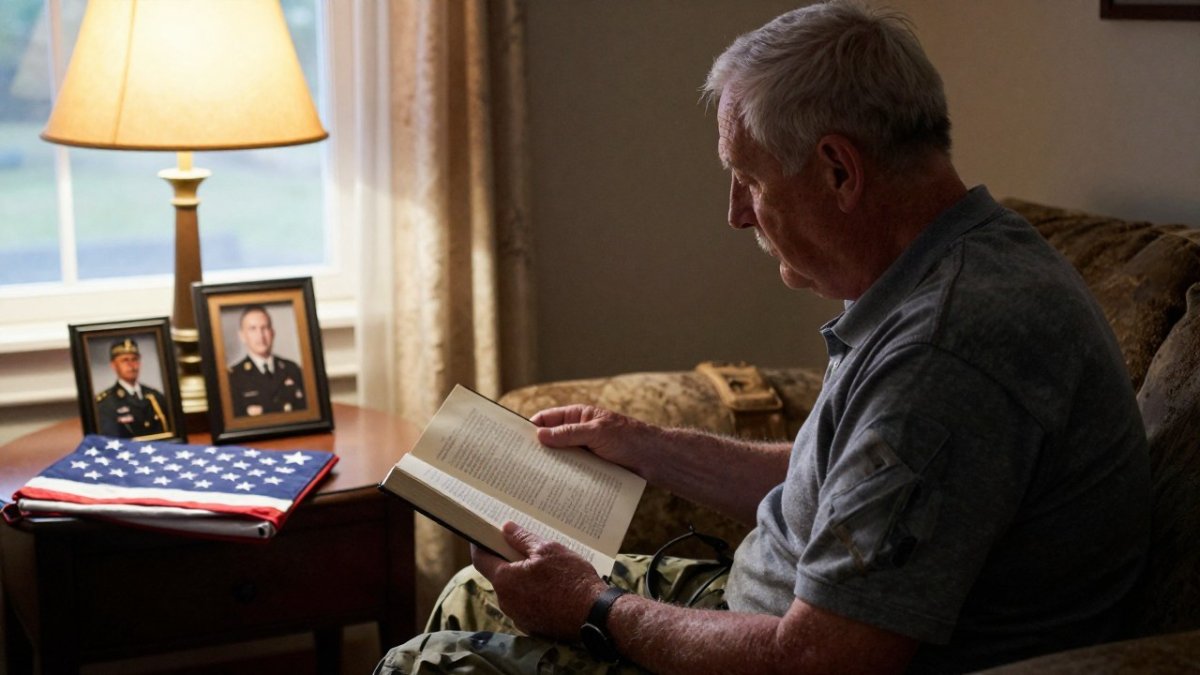
What most guides miss is that memoir quality varies enormously. Some are polished by professional co-writers, others are raw journals published nearly as written. Neither is automatically better.
If you want to understand why these accounts hit so hard before you pick one, read this explanation of what makes military memoirs so powerful.
Military History Books: The Wars, Campaigns and Context Behind the Stories
Campaign histories supply the frame that memoirs leave out. A memoir shows you one squad’s war. A history shows you why the squad was on that ridge, what the wider strategy was, and what the cost looked like at scale. Read them together and each one sharpens the other.
For the Gulf War era specifically, look for histories built on declassified documents and oral history collections rather than quick post-war summaries. The National Archives catalog is a good place to check whether an author’s claims trace back to primary sources.
Watch out: some popular war books recycle earlier books without new research. Check the notes section. If every citation points to other trade histories rather than archives, interviews, or official records, you’re reading a synthesis, not original scholarship.
Non-Fiction War Books for Young Adults: Age-Appropriate Entry Points
Young adult editions of war memoirs exist for a reason: the story matters, but the graphic detail needs calibrating for a teenage reader.
What most lists don’t explain is how an adaptation actually differs from the adult original, and that difference is the whole point of this section.
A practical way to choose, organized by the reader’s age and prior exposure rather than by publisher marketing:
- Ages 12-14, little prior reading on war: start with a narrative history or a memoir adaptation that foregrounds home front and training over combat. Look for editions explicitly labeled “adapted for young readers” and check the publisher’s content note.
- Ages 14-16, some prior reading: a memoir adaptation with a map section and glossary works well, because the reader can follow place names and ranks without stopping.
- Ages 16-18, strong reader: the adult edition of a memoir is often appropriate, but read the first combat chapter yourself before handing it over.
Parents should read the edition their child will read, not the adult original. The two can differ substantially.
- Check whether the edition is marked “adapted for young readers.”
- Read the publisher’s content notes.
- Ask the young reader what they want from it, history or story.
- Pair it with a museum or oral history site for context.
Watch out: a young reader edition can still contain graphic material if the original was especially explicit, and the label “young readers” is a publisher’s judgment, not a rating.
For readers who want to go deeper after a first adapted memoir, the same beginner-to-advanced sequence in the new-reader section above applies, just slowed down by a year or two per step.
Content Warnings and Emotional Intensity: What to Expect Before You Open the Cover
Military memoirs carry real weight, and knowing that in advance helps. Expect descriptions of combat injury, death of comrades, survivor guilt, and strained marriages. The heaviest passages often aren’t the battle scenes at all. They’re the phone calls home and the quiet after.
For readers whose families lived through deployment, the emotional load can arrive sideways. A chapter about a missed birth or a child’s first steps can land harder than a firefight. If that describes your situation, this guide to the impact of deployment on families gives useful context before you start.
Watch out: don’t read a graphic memoir late at night if you’re already carrying stress from your own service. Pace it. Put it down for a week. The book will wait.
Build Your Own Reading Pathway by Topic and Format
A reading pathway is a short plan that moves you from one book to the next with purpose. Pick a theme, a war, a service branch, a role like medic or intelligence, and read three books on it in sequence: one memoir, one history, one oral history collection. You’ll finish with a rounded view instead of scattered facts.
Format matters as much as topic. Audiobooks suit commutes and chores, and a strong narrator can carry a difficult chapter better than the page does. Print suits maps and photographs. If you do most of your reading on the move, this guide to connecting with military journey audiobooks will help you match narrator style to book.
- Choose one theme for the next three books
- Alternate memoir, history, oral history
- Match format to where you actually read
- Keep a short note on each book’s sourcing
Pick Up 10,000 Miles to the Delivery Room Next
If you want one book that captures the home front and the war at the same time, start here. About the Book has the details and purchase information. 10,000 Miles to the Delivery Room is Gregory S. Davis’s own account as a U.S. Marine during Operation Desert Storm, racing to get home before his first child was born. It sits at the intersection this whole guide describes: personal testimony, historical context, and the quiet battles military families fight far from any battlefield.
The book is written for veterans of the Gulf War era, for spouses who held the household together through deployment, and for anyone who wants war told through the heart of a husband and father. It honors the resilience and sacrifice behind military service.
Choosing what to read next is really a question of what you want to understand: the war, the service member, or the family waiting at home. 10,000 Miles to the Delivery Room covers all three through one Marine’s journal, with an authentic narrative from a veteran, a focus on the quiet battles military families face, and a story built around hope rather than only hardship. Get started with Gregory S. Davis and read the account that puts you in the boots of a husband racing the clock.
Frequently Asked Questions
What are the best military books for new readers who have never picked up a war memoir?
Start with shorter, narrative-driven titles rather than dense campaign histories. Look for memoirs under 350 pages with a clear personal arc, and pair each one with a single history book covering the same conflict so the context lands. Reading one memoir and one history per war keeps the material manageable. If you are unsure where to start, choose a book set in a conflict you already know something about, then branch outward once you have a feel for the pacing.
How do military memoirs differ from military history books?
Military memoirs are firsthand accounts written by someone who was there, so they carry personal testimony, emotion and a single viewpoint. Military history books synthesize many sources, including primary sources and oral history, to explain campaigns, strategy and outcomes. A memoir tells you what one night felt like; a history tells you why the unit was there. Reading both gives you the human perspective and the historical accuracy check in one pass.
Are there non-fiction military books suitable for young adults?
Yes. Several memoirs and histories are written or adapted for teen readers, usually trimming graphic violence while keeping the personal testimony intact. Look for editions labeled young adult or abridged, and check the reading level before buying. Parents should skim the opening chapters first, since intensity varies widely between titles. A good approach is to read the same book alongside your teen so you can talk through the combat and loss passages together.
Is 10,000 Miles to the Delivery Room available as an audiobook, and how long is it?
Gregory S. Davis’s memoir follows a Marine’s Operation Desert Storm deployment and his race home for the birth of his first child. For current availability of formats, pricing and details such as length, check the author’s website.
