
Last Updated: October 26, 2026
Quick Summary
Desert Storm was originally called Operation Desert Shield, the defensive deployment that began in August 1990 to protect Saudi Arabia. The name changed in January 1991, when the mission shifted from defending Saudi Arabia to driving Iraqi forces out of Kuwait. The offensive phase was redesignated Operation Desert Storm when the air campaign opened.
- The war itself is most commonly called the Gulf War, while Desert Storm names the coalition’s combat operation.
- The ground offensive inside Desert Storm was called Operation Desert Sabre, launched February 24, 1991.
- UN Security Council Resolution 678 set a January 15, 1991 deadline for Iraqi withdrawal.
- The combat phase, Desert Storm, lasted from January 17 to February 28, 1991.
- The ground war ended the fighting in roughly 100 hours after allied forces struck from an unexpected direction.
Table of Contents
- The Short Answer: Desert Storm Started as Desert Shield
- Gulf War 1990 Causes: Why Iraq Invaded Kuwait
- Operation Desert Shield: The Defensive Phase That Came First
- The Difference Between Desert Shield and Desert Storm
- Gulf War Timeline 1990-1991: From Invasion to Ceasefire
- Desert Sabre and the 100-Hour Ground War
- Why the Name Changed, and What It Meant for the Troops Who Lived It
- Read One Marine’s Account of the War Behind the Headlines
- Frequently Asked Questions
The Short Answer: Desert Storm Started as Desert Shield
Desert Storm was originally called Operation Desert Shield. The name changed in January 1991, when the mission shifted from defending Saudi Arabia to driving Iraqi forces out of Kuwait. That single fact resolves most of the confusion, but only if you first pin down what the question is asking.
“What was Desert Storm originally called?” has three valid readings, and each has a different answer:
- If you mean the U.S.-led military operation: it was first designated Operation Desert Shield, the defensive deployment that began in August 1990. The offensive phase was redesignated Operation Desert Storm when the air campaign opened in January 1991.
- If you mean the overall conflict: the war is most commonly called the Gulf War (also the Persian Gulf War or First Gulf War). “Desert Storm” is the name of the coalition’s combat operation, not the war itself.
- If you mean the ground phase specifically: the ground offensive was called Operation Desert Sabre, launched February 24, 1991, and concluded about 100 hours later.
A useful way to hold the chain together: the war was the Gulf War; the defensive buildup was Desert Shield; the offensive campaign was Desert Storm; and the ground offensive inside Desert Storm was Desert Sabre. Same theater, same coalition, different missions, and a new name to match each shift.
On the date, sources vary between January 16 and January 17, 1991, and the difference is usually a time-zone and authorization distinction rather than a contradiction. UN Security Council Resolution 678 set a January 15, 1991 deadline for Iraqi withdrawal; when Iraq did not comply, the air campaign began in the early hours of January 17 in the Persian Gulf region (the evening of January 16 in U.S. Eastern time). The widely cited start of Desert Storm is January 17, 1991, local time.
The direct answer: Desert Storm was originally called Operation Desert Shield. The war itself is the Gulf War; Desert Storm is the offensive operation; Desert Sabre is the ground phase.
Below, we’ll walk through how the naming worked, where Desert Sabre fits, and why veterans who deployed under one name sometimes came home under another. But first, here’s what most quick answers get wrong: they treat the names as interchangeable. They aren’t, and the timeline proves it.
Gulf War 1990 Causes: Why Iraq Invaded Kuwait
The Gulf War began with Iraq’s invasion of Kuwait on August 2, 1990, driven by debt, oil disputes, and Saddam Hussein’s regional ambitions (Milestones in the History of U.S. Foreign Relations). Iraqi forces overran Kuwait within days, and the United Nations Security Council responded with a series of resolutions demanding withdrawal.
A common mistake is reducing the conflict to a single cause. In practice, several pressures converged:
- Iraq owed substantial debt from its war with Iran and wanted Kuwait’s oil wealth to ease the burden
- Baghdad accused Kuwait of overproducing oil and depressing prices
- Iraq revived a long-standing territorial claim to Kuwaiti land
For readers who want the deeper background, our article on what caused the Gulf War in 1990 covers the diplomatic buildup in detail.
Operation Desert Shield: The Defensive Phase That Came First
Operation Desert Shield was the U.S.-led defensive deployment that began in August 1990 to protect Saudi Arabia from a possible Iraqi advance. It put coalition troops and equipment into the Persian Gulf region before a single offensive shot was fired.
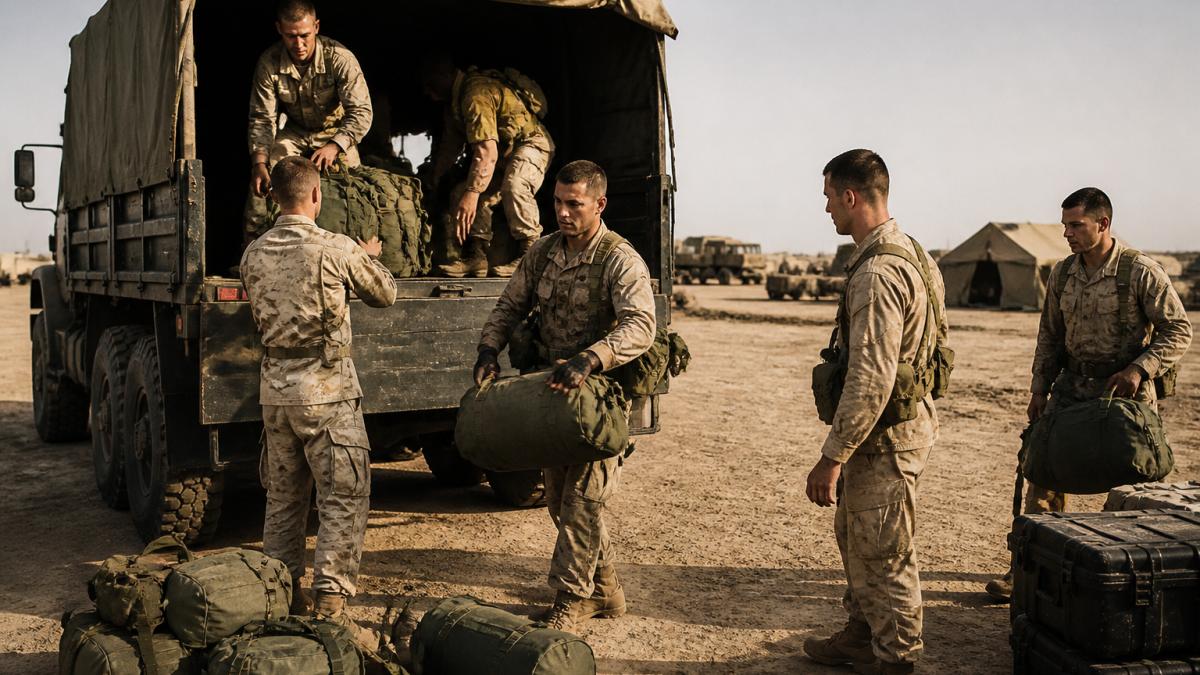
The buildup was enormous. Coalition partners assembled roughly 660,000 troops, with U.S.-led forces making up the largest share. Air bases, supply lines, and command centers were established across the region. The UN Security Council set a firm deadline for Iraqi withdrawal in Resolution 678, authorizing member states to use all necessary means if Iraq did not comply.
Watch out: many summaries skip straight to the air war and never explain that Desert Shield ran for months as a defensive operation. That gap is exactly why the naming question keeps coming up.
The Difference Between Desert Shield and Desert Storm
Desert Shield was defensive; Desert Storm was offensive. Desert Shield protected Saudi Arabia and assembled the coalition. Desert Storm launched the air campaign and, later, the ground offensive to remove Iraqi forces from Kuwait.
| Operation | Phase | Start | Mission |
|---|---|---|---|
| Desert Shield | Defensive | August 1990 | Protect Saudi Arabia, build coalition |
| Desert Storm | Offensive | January 17, 1991 | Air campaign to degrade Iraqi forces |
| Desert Sabre | Ground offensive | February 24, 1991 | Expel Iraqi forces from Kuwait |
The distinction is more than semantics. Troops who deployed during Desert Shield spent months in a defensive posture before the offensive began. The name change signaled that the waiting was over.
Gulf War Timeline 1990-1991: From Invasion to Ceasefire
The Gulf War timeline runs from Iraq’s invasion of Kuwait on August 2, 1990, to the ceasefire in late February 1991. The combat phase, Desert Storm, lasted from January 17 to February 28, 1991, according to the Naval History and Heritage Command.
- August 2, 1990: Iraq invades Kuwait
- August 1990: Operation Desert Shield begins
- November 1990: UN Resolution 678 sets the withdrawal deadline
- January 17, 1991: Desert Storm air campaign opens; the name changes
- February 24, 1991: Ground offensive, Desert Sabre, begins
- February 28, 1991: Ceasefire takes effect
The air campaign came first, with sustained strikes against Iraqi air defenses, command centers, and military infrastructure. The ground war that followed lasted only about 100 hours.
Desert Sabre and the 100-Hour Ground War
Desert Sabre was the coalition’s ground offensive, launched February 24, 1991, and it ended the fighting in roughly 100 hours. The plan avoided a costly frontal assault on Iraqi defenses. Instead, allied forces swung west and struck from an unexpected direction, then pressed toward Kuwait.
Iraqi forces collapsed faster than most planners expected. Many surrendered outright. The rapid advance brought coalition troops to the outskirts of Kuwait in days, and the campaign concluded with a ceasefire on February 28.
What most guides miss is that Desert Sabre is a third name in the chain. Desert Storm covers the air and ground phases together; Desert Sabre names the ground phase specifically. If you served in the ground war, you served under Desert Storm and Desert Sabre at once.
Why the Name Changed, and What It Meant for the Troops Who Lived It
The name changed because the mission changed. Once the coalition moved from defending Saudi Arabia to liberating Kuwait, “Shield” no longer described what the forces were doing. “Storm” fit an offensive campaign. That is the short version. The fuller version, which most summaries skip, is about how military operation names are actually chosen, and why “originally called” is a trickier question than it looks.
How operation names get assigned. U.S. military operations are given code names through a formal naming process, not chosen by the commander in the field on a whim.
Working name versus final codename. This is the distinction that trips people up. Desert Shield was not a placeholder that was later swapped out for marketing reasons; it was the approved name for a specific defensive mission. When the mission itself changed, from defending Saudi Arabia to offensive combat to liberate Kuwait, the operation received a new approved name, Desert Storm.
Why the question has multiple interpretations. “Originally called” can mean the operation’s prior designation (Desert Shield), the war’s common name (the Gulf War), or an earlier phase label (Desert Sabre for the ground war). Each is correct in its own frame.
Where to verify it. For readers who want primary-source grounding, the U.S. Department of Defense and service histories (including the Naval History and Heritage Command) document the transition from Desert Shield to Desert Storm and the dates of the air and ground campaigns.
For the troops, the shift carried real weight. Months of Desert Shield meant heat, drills, mail call, and waiting. Then came the air campaign, and then the ground war, compressed into days after a long buildup. President George H. W. Bush had framed the stakes in his State of the Union address, and the coalition held together through the deadline.
The naming confusion followed many service members home. Veterans who deployed in 1990 under Desert Shield and fought in 1991 under Desert Storm often describe their service with both names, because both are accurate. If you’re moved by what those troops carried, our Desert Storm books for veterans reading guide points to further accounts worth your time.
Read One Marine’s Account of the War Behind the Headlines
The headlines tell you the dates. They rarely tell you what it felt like to wait, deploy, and count the days until home.
That gap is where Gregory S. Davis’s memoir, 10,000 Miles to the Delivery Room, lives. It follows a U.S. Marine through Operation Desert Storm while he races to return home before the birth of his first child. The book focuses on the quiet battles military families face during separation, and it honors the resilience of ordinary people caught in defining moments.
If you want to know more about the author, Gregory Davis’s story as a Marine, author, and family man explains where the account comes from. Readers ready to get the memoir can buy the Desert Storm memoir online, and the book’s own page describes what’s inside.
Best for: Gulf War-era veterans, military spouses, and readers who want the human side of the timeline.
Skip if: you’re looking for a tactical or unit-level combat history.
Frequently Asked Questions
Was Desert Storm the same as the Gulf War?
Not exactly. The Gulf War is the umbrella name for the whole conflict, from Iraq’s invasion of Kuwait in August 1990 through the ceasefire in 1991. Operation Desert Shield was the defensive buildup, and Operation Desert Storm was the combat phase that opened on January 16-17, 1991. Desert Sabre was the ground offensive inside Desert Storm. So Desert Storm is one phase of the Gulf War, not a separate war.
What is the difference between Operation Desert Shield and Operation Desert Storm?
Desert Shield was defensive. After Iraq invaded Kuwait, U.S.-led forces deployed to Saudi Arabia to deter an attack and protect the Persian Gulf, building up to roughly 660,000 troops. Desert Storm was offensive. Once UN Security Council Resolution 678’s deadline passed, the coalition launched an air campaign on January 16-17, 1991, followed by the ground war on February 24. Same forces, same commanders, different mission.
Why was the operation called Desert Storm?
The name signaled a shift in mission. Desert Shield described holding a line; Desert Storm described bringing overwhelming air and ground force against Iraqi forces, command centers, and military infrastructure. The change told the public and the troops that the defensive posture was over and the combat phase had begun. Desert Sabre later named the ground offensive that closed out the campaign in 100 hours.
When did Operation Desert Storm begin and end?
The air campaign began January 16-17, 1991, and the ground offensive, Desert Sabre, opened February 24. President George H. W. Bush declared a ceasefire on February 28, 1991, after 100 hours of ground fighting. That February 28 date is the official end of the combat phase, though coalition forces remained in the region afterward under separate arrangements.
Desert Shield, Desert Storm, and Desert Sabre are three names for one war, and the people who served under them deserve more than a footnote. If you want a firsthand account of what that deployment cost a young Marine and his family, 10,000 Miles to the Delivery Room delivers it with honesty and hope. Get started with Gregory S. Davis and read the war through the eyes of a husband racing home for his child’s birth.
