
Quick Summary
A military author is a writer whose work draws directly on military service, through firsthand memoir, fiction shaped by combat or garrison life, or nonfiction history. Gregory S. Davis, a Marine veteran, is one example, known for his Desert Storm memoir 10,000 Miles to the Delivery Room.
- Firsthand service is the most useful sign of a military author, since veterans write from inside the experience.
- Military authors include veterans, journalists, historians, and novelists who write about military subjects.
- Gregory S. Davis’s memoir follows a Marine racing home from Operation Desert Storm for his first child’s birth.
- Readers can choose between memoir, fiction, or history depending on whether they want a firsthand account or context.
- Check the author’s background, the book’s framing, and its acknowledgments and notes before buying.
Table of Contents
- What Makes Someone a Military Author?
- Authors Who Served Versus Authors Who Write About the Military
- Military Memoirs: Firsthand Accounts From the Field
- Military Fiction and War Novels
- Operation Desert Storm Memoir: A Marine’s Story of Home and Duty
- Finding Military Authors and Their Books by Era and Conflict
- Choosing Your Next Military Book to Read
- Frequently Asked Questions
Last Updated: October 28, 2026
Gregory S. Davis is a Marine veteran and author whose memoir, 10,000 Miles to the Delivery Room, follows a Marine racing home from Operation Desert Storm for the birth of his first child. Learn more about the author’s background as a Marine and family man. This guide from Gregory S. Davis looks at what makes someone a military author, how memoirs and novels differ, and how to choose your next book, with a closer look at the Desert Storm memoir that anchors this list.
What Makes Someone a Military Author?
A military author is generally a writer whose work draws directly on military service, whether through firsthand memoir, fiction shaped by combat or garrison life, or nonfiction history. The category is broad, and readers often use it loosely to cover anyone who writes about war.
Several things tend to define the category in practice:
- Firsthand service: the author served, and the story comes from that experience.
- Subject matter: the work addresses military life, deployment, or conflict.
- Perspective: the book reflects a service member’s, veteran’s, or military family member’s point of view.
Not every writer in the category fits all three. What matters for a reader is knowing which kind of author you are dealing with before you buy.
Authors Who Served Versus Authors Who Write About the Military
The most useful distinction for readers is whether the author served or observed. Veterans write from inside the experience. Journalists, historians, and novelists who never wore a uniform can write about military subjects from other perspectives.
Neither is automatically better. A veteran’s memoir offers a firsthand perspective. Fiction can come from either side.
Readers can check the author’s background, the book’s framing, and its acknowledgments and notes.
When you choose, consider what you want from the book: a firsthand account, historical context, or fiction.
Military Memoirs: Firsthand Accounts From the Field
Military memoirs offer personal accounts of military experiences. Browse a curated list of memoirs focused on family and home.
When you read a memoir, notice how the author writes about the home front and the battlefield.
Military Fiction and War Novels
Military fiction gives authors room to invent characters and situations.
If you usually read fiction and are hesitant about nonfiction, a military novel may be an option to consider.
Operation Desert Storm Memoir: A Marine’s Story of Home and Duty
Operation Desert Storm, the 1991 U.S.-led campaign to expel Iraqi forces from Kuwait, produced a generation of service members whose stories are less often told than those from later conflicts. Gregory S. Davis writes from that moment, as a Marine who was called to war while his wife was expecting their first child. Read the full review of the memoir’s contents and reception.
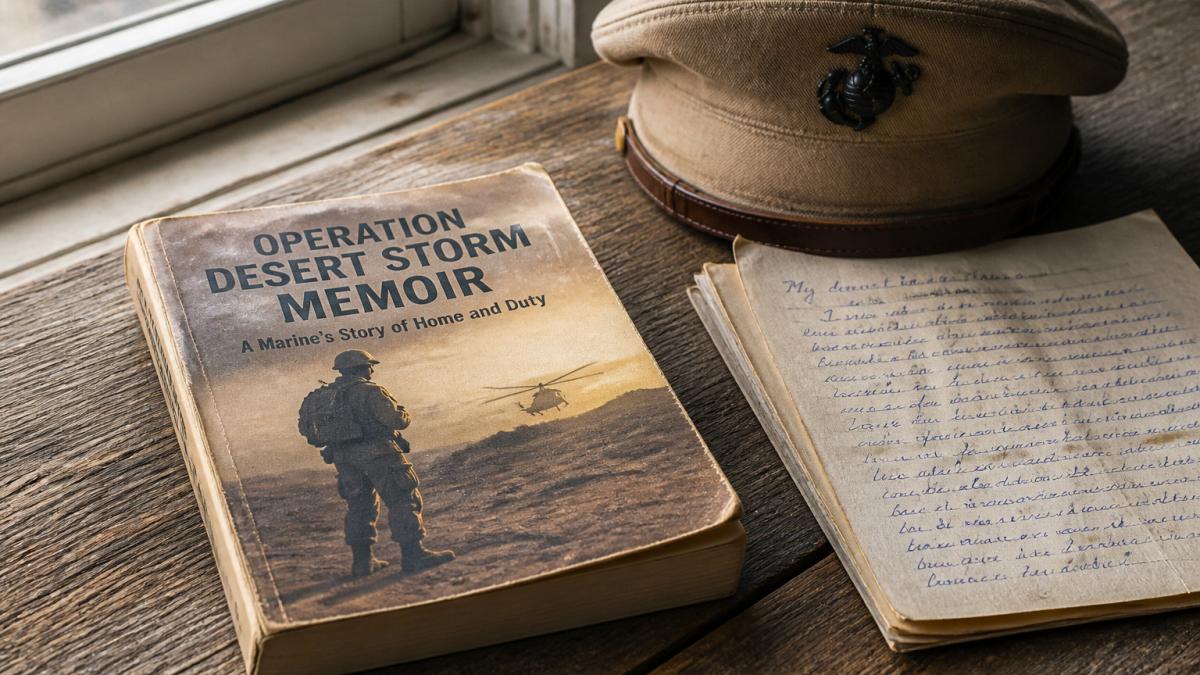
The story is less about the battle itself than about the distance between the front and home. It tracks the strain of trying to get back in time for a birth, the quiet battles that military families carry, and the hope that holds them together. For readers who lived through that era, or who grew up hearing about a parent’s deployment, it offers a personal view that official histories do not.
10,000 Miles to the Delivery Room
10,000 Miles to the Delivery Room is written as a private journal kept during the call to war and the race to get home. Its honesty about fear, longing, and family is what sets it apart. Readers who are military spouses, parents, or veterans may recognize their own experiences in its pages, even if their conflicts were different.
If you are considering it, the book suits readers who value personal narrative and emotional honesty, rather than a strategic account of the war. You can find more about the book and the author on the project’s own pages, linked from the sections above. Read the dedicated page describing the journal and its story.
The article’s key facts about the Desert Storm memoir are summarised below.
| Item | Detail |
|---|---|
| Campaign | Operation Desert Storm, 1991 |
| Author | Gregory S. Davis, Marine veteran |
| Book | 10,000 Miles to the Delivery Room |
| Story focus | Racing home for the birth of his first child |
| Book format | Private journal kept during the call to war |
Finding Military Authors and Their Books by Era and Conflict
Military books can be organized by era and conflict. The list below is a starting framework.
The Gulf War period (1990-1991). Operation Desert Storm produced fewer widely circulated memoirs than later conflicts, which makes firsthand accounts from that moment relatively scarce. Gregory S. Davis’s 10,000 Miles to the Delivery Room is one such account, written from the perspective of a Marine racing home for the birth of his first child. Readers looking for Gulf War writing should expect a mix of unit histories, journalist accounts, and a smaller number of veteran memoirs.
A way to search within any era:
- Pick the conflict or era you are interested in.
- Decide whether you want memoir, fiction, or history.
For Desert Storm and related veteran reading, see the reading lists linked in the final section.
Choosing Your Next Military Book to Read
Start with the question of what you want from the book. You can consider whether you prefer a memoir, fiction, or history.
Before you buy, consider the author’s background and whether the book is a memoir or a novel. 10,000 Miles to the Delivery Room offers a personal narrative about a Marine’s journey through Operation Desert Storm while racing home for the birth of his first child.
Frequently Asked Questions
Who are some famous military authors?
Military authors range from veterans who wrote fiction based on their service to combat veterans who published firsthand memoirs. Notable names span several generations and conflicts, and many have written both novels and nonfiction. Readers looking for a starting point can browse by genre, such as memoir, fiction or history, and by conflict, such as the Gulf War or Vietnam. Gregory S. Davis, a U.S. Marine veteran, is one author whose work focuses on the Gulf War era, through his memoir 10,000 Miles to the Delivery Room.
What is the difference between a military memoir and a war novel?
A military memoir is a nonfiction account written by someone describing events they personally lived through. A war novel is fiction, though it may draw on the author’s service. The choice depends on whether you want a personal account or a fictional story.
What is 10,000 Miles to the Delivery Room about?
10,000 Miles to the Delivery Room is a true story by Gregory S. Davis, a U.S. Marine veteran. It follows a Marine during Operation Desert Storm who races to return home for the birth of his first child. The book focuses on the emotional strain of separation during deployment and the resilience of military families.
What books have been written by soldiers who served in war?
People who served have written about military experiences in different forms. When browsing, consider whether the author served and which unit or conflict the book addresses.
Gregory S. Davis wrote 10,000 Miles to the Delivery Room to show how a Marine’s deployment reaches into the home. If that story speaks to your own experience of service or family, you can buy the book directly from the publisher’s page.
